You have typed cursed text. You have seen a Zalgo username in a Discord server. You might have even generated Zalgo text yourself for a TikTok bio or a Roblox name. But have you ever stopped to actually look at the word itself and wonder, what does “Zalgo” mean? Is it Latin? Is it a real word borrowed from some language? Or is it something else entirely?
This guide answers that exact question. Not the broader history of how the character spread across the internet, that story lives in our complete Zalgo origin guide, but specifically the word itself. Where “Zalgo” came from, what it actually means, how people pronounce it, and why a single made-up word became one of the most recognizable names in internet horror culture.
Is “Zalgo” a Real Word?
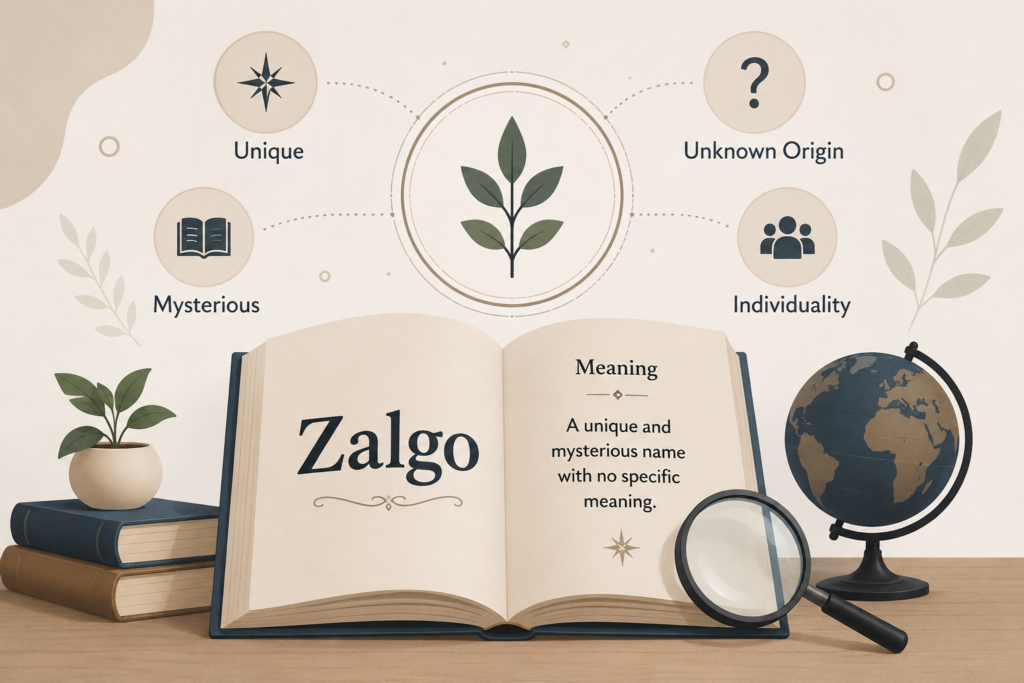
No. “Zalgo” is not a word that exists in any established language, not Latin, not Greek, not any of the languages commonly mined for horror character names. It has no dictionary entry, no linguistic root, and no etymology in the traditional sense that words like “vampire” or “werewolf” have.
According to Wiktionary, the word is documented as having been coined in 2004 specifically as the name of a fictional entity. There is no ancient root, no borrowed syllable from a dead language, no hidden meaning buried in linguistics. “Zalgo” is, in the most literal sense, an invented word, created from scratch for a single specific purpose.
This puts Zalgo in an interesting category alongside other invented horror names like “Cthulhu” from H.P. Lovecraft’s mythos, which also has no real linguistic origin and was constructed purely for its unsettling sound. Names built this way are designed to feel alien and wrong specifically because they do not connect to anything familiar in human language. Your brain cannot anchor the word to an existing meaning, which is part of why it feels unsettling on first encounter.
Who Actually Coined the Word “Zalgo”?
This is where the story gets interesting, because the answer comes directly from the source rather than internet speculation.
The word and the character were created by Dave “Shmorky” Kelly, a Something Awful forum member and webcomic creator, in 2004. For years afterward, internet communities speculated about where the name and concept originated, treating it almost like a piece of collective folklore with no clear author.
Shmorky put that speculation to rest himself. In a 2009 post on the Something Awful forums, he stated plainly: “I’ll tell you where it came from. From me. I just made it up.” He went on to describe Zalgo simply as “something horrible” and “something that’s coming”, intentionally vague, intentionally ominous, and intentionally without deeper explanation.
This direct confirmation matters because it settles a question that circulated in internet horror communities for years. Zalgo was not adapted from existing folklore, was not translated from another language, and was not the product of a collaborative naming process. One person invented the word for a specific creative purpose, and the internet took it from there.
What Does “Zalgo” Symbolically Represent?
While the word itself has no dictionary meaning, the character it names has accumulated a consistent symbolic identity across two decades of internet culture, and that symbolic meaning is arguably more important than any literal definition would be.
Within internet horror communities, Zalgo represents chaos without form, an entity associated with the corruption of normal, familiar things rather than a creature with a defined physical shape. Community-written descriptions reference Zalgo as embodying “the hive-mind representing chaos” and “invoking the feeling of chaos without order.” This is consistent with how Know Your Meme documents the entity: an internet legend believed to cause insanity, destruction, and the unraveling of reality itself, often compared directly to Cthulhu, H.P. Lovecraft’s cosmic horror entity from 1920s pulp fiction.
That Cthulhu comparison is not incidental. Both names share the same functional purpose, words invented specifically to represent something beyond normal comprehension, deliberately avoiding any real-world linguistic association that might make the concept feel smaller or more familiar than intended. This same chaotic, undefined energy is exactly what powers the Zalgo meme format that still circulates across Reddit, Discord, and TikTok today.
Community folklore around Zalgo also includes the descriptive phrase “He Who Waits Behind the Wall”, language that frames the entity as patient, persistent, and always present just beyond perception rather than actively hunting or visible. This framing reinforces why corrupted text became the visual language for the concept: the wrongness is constant and structural rather than a single dramatic event.
How Do You Pronounce “Zalgo”?
Pronunciation has never been formally standardized, which is itself revealing about the word’s invented nature. Most English-speaking internet communities pronounce it as ZAL-go, with the stress on the first syllable, rhyming roughly with “gal” followed by “go.”
There is no authoritative pronunciation guide because there is no governing body or original creative work, like a published novel or film, that established a definitive spoken version. The word exists almost entirely in written and visual internet culture, which means its spoken pronunciation evolved organically through forum discussions and later through video content rather than being fixed by any original source material.
This is actually fairly common for internet-originated proper nouns. Words that begin as text-based memes often develop multiple acceptable pronunciations because there was never a moment where someone said the word aloud in an authoritative context that everyone then copied.
The Connection Between the Name and the Text Style
Here is where the name’s meaning intersects directly with what most people actually search for: why is heavily distorted, corrupted Unicode text called “Zalgo text” specifically?
The connection is direct rather than metaphorical. According to Wikipedia’s documentation of the phenomenon, Zalgo text is named for the 2004 internet creepypasta entity, and the visual distortion technique, stacking Unicode combining diacritical marks above and below normal letters, became associated with the character because it was used in the earliest image macros depicting Zalgo’s influence corrupting otherwise normal cartoon images.
The text was not named Zalgo because the word itself describes corruption linguistically. It was named Zalgo because that specific visual distortion technique became the signature visual representation of the character in the earliest viral content. The name is attached to the technique the same way a brand name attaches to a product category, through association and repetition rather than literal description.
This is also why the word has migrated into unexpected technical contexts. Within software development communities, “releasing Zalgo” became an established idiom describing inconsistent or unpredictable code execution behavior, a usage that has nothing to do with horror content but borrows the name specifically because it evokes uncontrolled chaos breaking through an otherwise stable system. The same name now lives most actively inside Discord communities, where our Zalgo text for Discord guide covers exactly how the corrupted text style works across usernames, bios, and chat messages.
Why an Invented Word Became So Sticky
Understanding why “Zalgo” specifically caught on, rather than fading like thousands of other internet-coined terms from the same era, comes down to a few specific qualities.
It is short. Two syllables, easy to type, easy to remember, easy to use as a username component decades before that became standard internet practice.
It sounds foreign without belonging to any identifiable language. Words that sound vaguely ancient without triggering recognition of an actual language tend to feel more unsettling than words borrowed from real mythology audiences already associate with specific cultural contexts.
It had no competing meaning to displace. Unlike naming a horror entity after an existing mythological figure, “Zalgo” arrived as a blank vessel the internet could fill with whatever meaning the community collectively decided.
And it attached itself to a visual technique that kept finding new applications. As Unicode combining character distortion spread from horror image macros into gaming usernames and social media aesthetics, the name traveled with the technique into communities that had never encountered the original 2004 content at all.
Zalgo Name Meaning vs. The Full Zalgo Story
This article has focused narrowly on the word itself, its invented nature, its creator, its symbolic weight, and its pronunciation. That is intentionally different from the broader question of how the Zalgo phenomenon spread across the internet, which communities adopted it, and how the corrupted text style evolved technically over the following two decades.
For the complete picture, the 2004 webcomic connection, how the aesthetic spread through Something Awful and 4chan’s /x/ board, the Unicode mechanics behind the visual distortion, and where Zalgo culture lives today across Discord, TikTok, and gaming platforms, our complete guide to what Zalgo is and where it came from covers all of that ground in full detail. That guide is the central resource this site has built around the Zalgo entity, and this article on the name’s meaning specifically is meant to complement it rather than repeat it.
The Word That Means Nothing, and Everything
“Zalgo” has no entry in any dictionary because it was never meant to. It was built in 2004 to represent something specifically undefinable, chaos without shape, corruption without explanation, a presence that resists being pinned down by language the same way it resists being pinned down by normal text formatting.
That is precisely why the word still works two decades later. It never meant anything literal, which means it has never become dated the way words tied to specific real-world references eventually do.
Want to see what that corruption actually looks like in text form? Use our free Zalgo text generator at Cursed Text Creater to generate authentic Zalgo, glitch, and void text instantly, free, unlimited, no sign-up required.
Frequently Asked Questions
What does the name Zalgo actually mean?
Zalgo has no literal dictionary meaning or linguistic origin. It was invented in 2004 by Dave “Shmorky” Kelly specifically as the name for a fictional internet horror entity. The word carries symbolic meaning within internet culture, representing formless chaos and the corruption of normal reality, but it is not derived from any existing language.
Who came up with the word Zalgo?
Dave “Shmorky” Kelly, a Something Awful forum member, confirmed in a 2009 forum post that he personally invented the word and the character in 2004, stating directly that he made it up rather than adapting it from existing folklore or another source.
How do you pronounce Zalgo?
Most English speakers pronounce it as “ZAL-go,” with stress on the first syllable. There is no official standardized pronunciation since the word originated in text-based internet culture rather than spoken media.
Why is corrupted text called Zalgo text specifically?
The distorted Unicode combining character text style is named after the Zalgo entity because that specific visual distortion technique was used in the earliest viral image macros depicting the character’s influence corrupting normal images in 2004. The name attached to the technique through association rather than literal description.
Is Zalgo related to Cthulhu or Lovecraftian horror?
Not directly, but they share a similar function. Both Zalgo and Cthulhu are invented names with no real linguistic origin, designed specifically to represent cosmic-scale chaos and horror beyond normal comprehension. Internet communities frequently compare the two because of this shared conceptual role, even though Zalgo originated independently in 2004 rather than being derived from Lovecraft’s work.