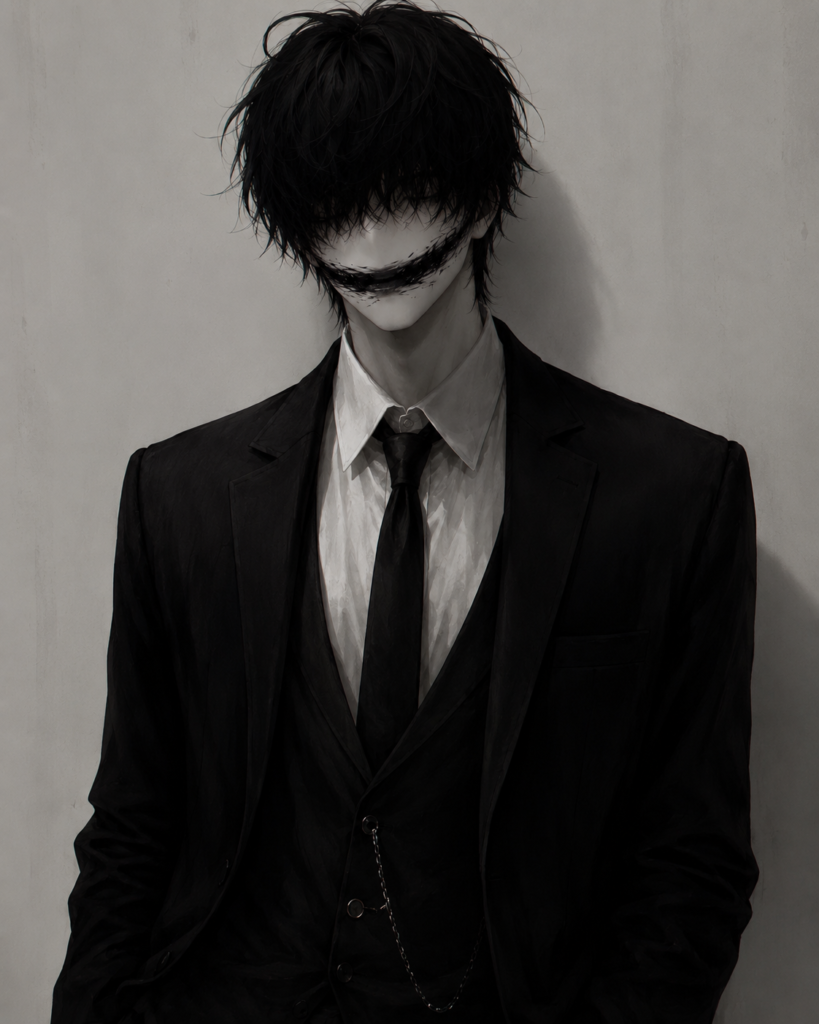
Zalgo has never had an official body. That is the entire point of the character, a formless entity associated with corruption and chaos that internet horror communities deliberately left undefined back in 2004. But for two decades, fan artists, creepypasta writers, and Discord communities have been doing the one thing the original concept resisted: giving Zalgo a human face.
Want to see Zalgo’s chaos in text form first? Try our free cursed text generator at Cursed Text Creater. Now, what would Zalgo actually look like as a person? Based on twenty years of fan interpretation across DeviantArt, ArtStation, and creepypasta writing communities, a consistent picture has emerged, even though there is no single “canon” answer. This article walks through the recurring visual patterns, the personality traits fans have built around a human Zalgo, what the design choices symbolize, and why a character built specifically to avoid having a face has inspired so many people to draw one anyway.
Why Zalgo Was Never Supposed to Have a Human Form
Before getting into what a human Zalgo looks like, it helps to understand why this question is interesting in the first place.
Zalgo originated in 2004 on Something Awful’s forums, created specifically as a formless presence rather than a defined creature. According to Wikipedia’s documentation of Zalgo text, fans of the original story have conceptualized Zalgo as “either an unseen supernatural force, a secret cabal, or perhaps even an evil demigod,” frequently drawing comparisons to the Great Old Ones in the work of H.P. Lovecraft. The entity was built to represent corruption itself, not a corrupted being, but the corruption process. That ambiguity was a feature, not a gap waiting to be filled.
And yet people filled it anyway. Almost immediately, fan artists began producing visual interpretations, and Wikipedia specifically notes that “fan art depictions of Zalgo have included drawings and short films” as a recognized part of the character’s cultural footprint. This is the tension at the heart of every “Zalgo human” interpretation: artists are humanizing something explicitly designed to resist humanization, and the results say as much about internet horror aesthetics generally as they do about Zalgo specifically.
The Recurring Visual Pattern Across Fan Interpretations
Looking across two decades of fan art on platforms like DeviantArt and Pinterest, a surprisingly consistent visual language has emerged for human Zalgo designs, even without any official source material dictating it.
The Face Is Deliberately Unremarkable: At First
One of the most interesting threads running through multiple independent fan interpretations is that human Zalgo is often drawn as ordinary rather than monstrous at first glance. One DeviantArt artist described their version bluntly: “He’s not really attractive and in my opinion, looks rather old.” Another interpretation went the opposite direction entirely, describing him as having “a pretty face” while still being, in the artist’s words, “a savage sonuvabitch.”
This split is not a contradiction, it is actually the most thematically accurate choice available to artists working with this character. Zalgo represents corruption hiding inside normal things. A human form that looks instantly demonic would defeat the entire premise. The most effective fan interpretations lean into a face that could pass as completely human in a crowd, with the wrongness only becoming apparent the longer you look.
Dark Robes, Capes, and Concealment
Across multiple independent fan designs, clothing choices converge on dark, concealing garments. One detailed creepypasta interpretation describes “long, black hair and black-and-red robes” with “red-painted claws” as defining visual elements. A separate fan design built specifically for an ongoing webcomic project includes a shoulder cape, with the artist noting they deliberately avoided a white shirt because it would read as too similar to another well-known creepypasta figure, Slender Man, in the shared visual universe these characters occupy.
This convergence on robes and capes rather than modern clothing is worth noting. It signals “ancient” or “outside of time” rather than contemporary, distancing the human form from looking like an ordinary person you would pass on a street in 2026 America, even while keeping the face recognizably human.
Hidden Wings, Horns, and Tails
Several fan artists describe additional inhuman features that remain mostly concealed rather than openly displayed. The same webcomic-focused design mentioned above specifically notes plans for “wings, tail, and horns in a later update” with the explicit detail that “those can only be seen in the shadows regardless.” This is a deliberate design philosophy, not an oversight, the inhuman elements exist, but they stay in darkness, reinforcing the idea that Zalgo’s true nature is something that reveals itself only when you are not looking directly at it.
Color Symbolism: Black, Red, and Bone
Searches across Zalgo-tagged art collections turn up a heavy concentration of black, red, and bone-white color associations. Tags like “blood incarnation,” “bone incarnation,” and “flesh incarnation” appear in multi-part fan concepts where artists split Zalgo into several physical manifestations rather than a single fixed form. One detailed fan concept on DeviantArt describes Zalgo as capable of splitting into three incarnations, bone, blood, and flesh, used by a fictional “Cult of Zalgo” attempting a ritual to bring the full entity back into the physical world.
This three-part incarnation idea is one of the more creative additions the fandom has built onto sparse original material, taking a character with zero canonical physical description and constructing an entire internal mythology around it.
What Personality Would a Human Zalgo Have?
Visual design is only half the question. The fan community has also built out personality traits for a human Zalgo, almost entirely through implication and tone rather than direct characterization, fitting for a character whose original “dialogue” consisted of a single corrupted phrase.
Patient Rather Than Aggressive
The internet folklore phrase most closely associated with Zalgo describes him as “He Who Waits Behind the Wall”, patient, persistent, present at the edge of perception rather than actively hunting. A human Zalgo built around this framing would not be characterized by violent outbursts. The personality that fits the established tone is closer to quiet and watchful, unsettling specifically because of how little he reacts to anything.
Charismatic in a Way That Feels Wrong
The “pretty face” interpretation mentioned earlier carries an implicit personality trait: charm used as camouflage. A human Zalgo who is conventionally attractive and socially smooth fits a specific horror archetype, corruption that gets invited in rather than a monster that breaks down the door. This tracks with how TV Tropes’ fan theory collection on Zalgo repeatedly frames the character as something that spreads through proximity and influence, with one entry framing the corruption Zalgo causes as “simply a side-effect” of a larger consuming process rather than an act of intentional violence.
Detached From Conventional Morality
Across fan writing, human Zalgo rarely gets written as evil in a motivated sense, wanting something specific and pursuing it through villainous means. Instead, the personality reads as indifferent to human categories of right and wrong entirely. Corruption happens around him the way weather happens, not because he wants to hurt anyone specifically, but because his presence inherently destabilizes whatever it touches.
The Cultural Function of Humanizing Zalgo
Why does a fandom keep doing this, taking a deliberately formless horror concept and giving it a face, a wardrobe, even a personal mythology with incarnations and cults?
Part of the answer is practical. Visual media, fan art, webcomics, roleplay communities, needs something to draw and write about. A truly formless entity is difficult to sustain creative output around indefinitely. Giving Zalgo a human form makes the character usable across more creative contexts: comics, roleplay servers, original character crossovers with other creepypasta figures like Slender Man, the subject of repeated direct comparisons in fan circles.
Part of the answer is also about what makes horror concepts last. Wikipedia notes that Zalgo text specifically “ties in with an overall aesthetic sensibility of the strange and impossible” within surreal meme culture, and that culture has remained active on platforms like TikTok and Discord well into 2026, two decades after the character’s creation. A human form gives audiences something to project onto, something that feels almost relatable while representing something explicitly inhuman. That tension between “almost human” and “definitely not” is exactly the uncanny valley effect that makes the visual interpretations work.
The Face That Was Never Supposed to Exist
A character built to represent formless corruption has spent twenty years getting drawn, redrawn, and reinterpreted with a human face anyway, and the fact that there is no single correct answer is precisely what has kept the question interesting for this long. Every artist who has taken on a human Zalgo design has had to invent their own answer to a question the source material deliberately refused to settle.
That same unsettled, corrupted energy is exactly what defines the text style that carries the character’s name. If you want to see what that corruption looks like in text form rather than illustration, our Zalgo text generator converts any text into authentic Zalgo-style distortion instantly. For lighter distortion that stays readable, our glitch text generator covers that style specifically, and our void text generator handles the heavier, more atmospheric variant popular in gaming communities.
For the complete origin story behind the character this entire fandom is built around, where Zalgo actually came from and how the text style got its name, our pillar guide on what Zalgo is covers the full history in detail. And if you are wondering whether the word itself has any deeper meaning beyond the character, our Zalgo name meaning guide breaks down exactly where the name came from and what it represents symbolically.
Free. Unlimited. No sign-up required. Generate your own Zalgo, glitch, or void text at Cursed Text Creater right now.
Frequently Asked Questions
Is there an official human form for Zalgo?
No. Zalgo has no canonical physical appearance of any kind, human or otherwise. The character was created in 2004 as a deliberately formless presence. Every human depiction of Zalgo that exists is fan interpretation, with no official source material establishing a definitive appearance.
What do most fan art depictions of human Zalgo have in common?
Recurring elements across independent fan interpretations include dark robes or capes, black and red color schemes, concealed inhuman features like horns or wings that only appear in shadow, and faces that range from deliberately unremarkable to conventionally attractive, both choices serving the theme of corruption hiding inside something that looks normal.
Why do fans compare human Zalgo to Slender Man?
Both characters originated in similar internet horror communities around the same era and share a loose creative universe in fan fiction and roleplay circles. Fan artists working on human Zalgo designs have specifically noted avoiding visual choices, like certain clothing, that would make their design look too similar to established Slender Man iconography.
Does Zalgo have a personality in fan interpretations?
Yes, though it is built almost entirely through tone and implication rather than direct characterization. Common traits across fan writing include patience, detachment from conventional morality, and a corrupting influence that spreads through presence and proximity rather than direct confrontation.
Is Zalgo related to Lovecraftian horror entities?
Fans frequently compare Zalgo to the Great Old Ones from H.P. Lovecraft’s mythos because both represent cosmic-scale chaos beyond normal human comprehension, rather than a defined villain with relatable motives. This comparison appears consistently across fan discussion and is documented as part of the character’s broader cultural reception.